Creatine Benefits: More Than Just Muscle Growth | Complete Guide

Updated: Feb 17

Disclosure: Some links in this article are affiliate links, which means I may earn a commission if you make a purchase through them—at no additional cost to you. I only recommend products that I trust and believe can benefit your recovery or performance journey.
What Is Creatine and How Does It Work?
Creatine is an organic acid made in the liver, kidneys, pancreas, and brain. Now that might sound really scientific, but I promise we aren't going to delve into organic chemistry in this article. Simply put, as an organic acid, creatine plays an important process in supplying energy to skeletal muscle and in maintaining brain energy stability.
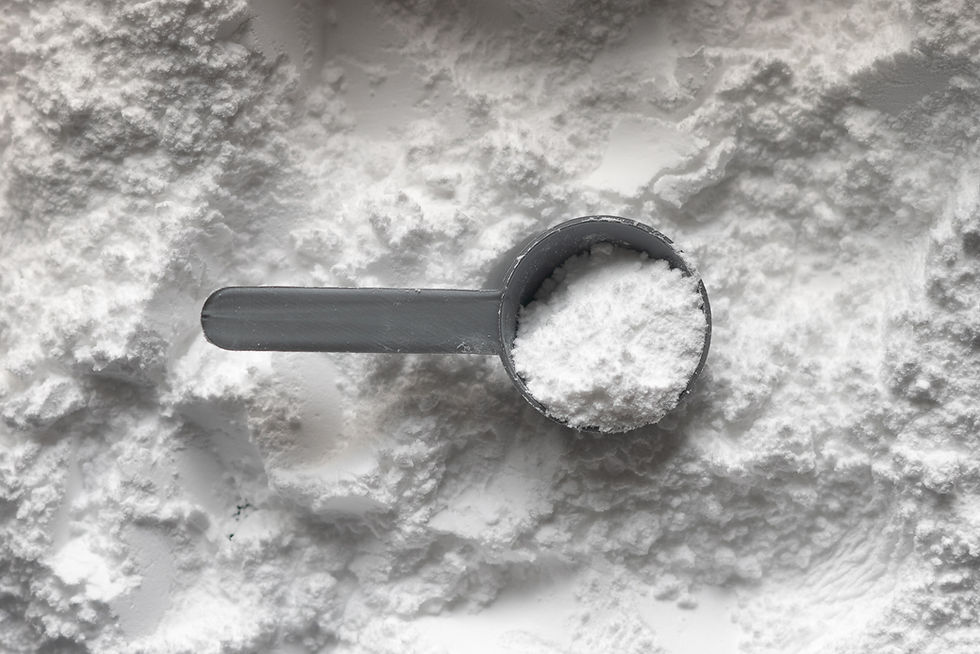
Key takeaway: Creatine benefits extend far beyond just improving muscle strength and performance. Research shows it also helps maintain and improve brain health, making it one of the most versatile supplements available today.
The Science Behind Creatine Synthesis
For your body to utilize creatine's benefits, it must first be available for use. Creatine synthesis—the process through which your body creates creatine—involves a complex sequence across multiple body systems.
Before creatine can be manufactured internally, three critical amino acids are required:
Glycine and L-arginine (which your body synthesizes)
Methionine (an essential amino acid acquired through dietary sources like fish and red meat)
Additionally, hormones such as testosterone and growth hormone, along with specific synthesizing enzymes, are necessary for creatine production. This multifaceted process can be directly supported through dietary creatine supplementation.

Once synthesized or consumed, creatine is either immediately used for energy needs or stored for later use. Since both brain and muscle tissues use adenosine triphosphate (ATP) as their primary energy source, creatine helps improve phosphate metabolism, enhancing overall energy utilization and efficiency.
Simply put: The greater your creatine availability, the better your body can respond to energy demands, whether during intense workouts or cognitive challenges.

Why Supplement With Creatine?
You might wonder: "If my body produces creatine naturally, why supplement?" The answer lies in efficiency and optimization.
Assuming your creatine synthesis pathways function at 100% efficiency (which is rarely the case), your body likely prioritizes using glycine, methionine, and L-arginine (remember, those three amino acids) for functions beyond creatine production. Research has consistently demonstrated that creatine supplementation can increase intramuscular creatine stores by 20-40%.
This significant increase makes perfect sense—it's far more efficient to directly supplement with creatine than to "hope" your body prioritizes creatine synthesis.
The creatine benefit advantage: By supplementing with exogenous creatine, you enhance availability for meeting your body's physiological needs, whether for athletic performance, recovery, or cognitive function. This is why we are happy to recommend and sell creatine at our Ellisville MO clinic!

Is Creatine Supplementation Safe?
This question tops the list of concerns I receive at Integrative Therapeutics when discussing creatine supplementation with my clients. For those of you who may be wondering, "Is creatine safe?", creatine is among the most extensively researched supplements available today, with no reports of serious side effects for either men or women in the literature of which I am aware!
Side Effects and Considerations
While creatine's safety profile is excellent, some experts recommend cycling your supplementation—abstaining for two weeks after each 6-8 week period—to prevent your body from becoming overly dependent on external creatine use.
For individuals without underlying medical conditions, creatine supplementation proves safe, cost-effective, and beneficial when combined with regular exercise. However, as with any supplement, consult your healthcare provider before beginning creatine supplementation.
At Integrative Therapeutics, we recommend and sell creatine to our patients and clients. If you are unsure if creatine supplementation is right for you, click the button below to schedule your consultation today.
Evidence-Based Creatine Benefits
The extensive research on creatine has revealed a surprising range of benefits that extend well beyond the gym. Here's what science tells us about creatine benefits:
Performance and Muscle Benefits
Increases muscle mass and enhances overall performance
Improves maximum muscle strength, power output, and fat-free mass development
Enhances high-intensity exercise capacity and anaerobic performance
Recovery and Rehabilitation Benefits
Accelerates tissue regeneration after intense exercise sessions
Improves overall recovery metrics after training
Enhances bone growth and regeneration processes
Helps maintain and rebuild muscle mass following periods of immobilization
Supports tendon rehabilitation and healing
Mental Health and Cognitive Benefits
Improves symptoms in patients with post-traumatic stress disorder (PTSD), depression, and fibromyalgia
Reduces symptoms of depression in clinical populations
Enhances memory performance and cognitive function
Supports brain energy metabolism and neuroprotection
As this research shows, creatine's benefits extend far beyond what most people associate with this supplement. From enhancing physical performance to supporting mental health and recovery, creatine offers a comprehensive range of advantages that make it worth considering for various health and fitness goals, which is why at Integrative Therapeutics we are proud to sell creatine to our patients and clients.
Choosing the Right Creatine Supplement
Not all creatine supplements deliver the same benefits. As an integrative physical therapist, I look for several quality indicators in the supplements I recommend:
Good manufacturing practices (GMP certification)
Clean, minimal ingredients without unnecessary fillers
Micronized forms for better absorption and reduced digestive issues
Third-party testing for purity and potency
Personally, I recommend Allmax's creatine monohydrate—a product I recommend to my clients, and one that I use personally. With rigorous lab testing for every production lot, this high-quality supplement meets the standards I look for in creatine products.

Click here to read more about Allmax's creatine monohydrate.
Recommendations for Creatine Usage
For optimal creatine benefits, consider these usage guidelines:
Start with a loading phase of 20g daily (divided into 4-5 servings) for 5-7 days to saturate muscles quickly (optional but effective)
Maintain with 3-5g daily, preferably post-workout or with a meal containing carbohydrates
Stay well-hydrated while supplementing with creatine (see my article on hydration here)
Avoid high doses during periods of extreme heat stress and humidity, as this may place additional stress on the kidneys
Consider cycling off creatine for 2 weeks after every 6-8 weeks of use (though many researchers now suggest continuous use is safe)
Frequently Asked Questions About Creatine Benefits
When is the best time to take creatine?
Research suggests taking creatine post-workout may be slightly more effective, but consistency matters more than timing.
Will creatine make me gain weight?
Initially, yes—primarily from water retention in muscle tissue. This is a normal and desired effect that enhances performance and volume.
Do I need to cycle creatine?
While traditional advice suggested cycling, current research indicates continuous use is safe for most individuals.
Is creatine beneficial for vegetarians and vegans?
Absolutely. Since vegetarian/vegan diets contain less dietary creatine, supplementation may be even more beneficial for these groups.
Can women take creatine? Yes, women experience similar creatine benefits without unwanted masculinizing effects, as creatine works independently of hormonal pathways.
Remember, while creatine offers numerous evidence-backed benefits, it works best as part of a comprehensive approach to health, nutrition, and fitness. Combine creatine supplementation with proper training, adequate hydration, and balanced nutrition for optimal results.
If you are interested in seeing if creatine is right for you, or want training or nutrition recommendations, schedule your session with Dr. David Didlake, DPT today!
IN CONCLUSION
Creatine is a naturally occurring substance that plays an integral role in the health of the body. For anyone wanting to improve sports performance, enhance recovery, or improve mental health, creatine supplementation may be the inexpensive option that provides an extra boost to help achieve your goals.
Have questions about integrating creatine into your supplementation routine? Reach out by clicking the button below to schedule your appointment for personalized guidance!
Here's to your (muscle and brain) health, and your game!
Dr. David Didlake, DPT
PT, Cert. SMT/DN, CSCS, Cert. TPI Medical Level 3, Dip. Osteopractic, FAAOMPT
Owner, Integrative Therapeutics "Home of the Saint Louis Golf Doc"
Follow me @theintegrativeclinic @thestlgolfdoc
About the Author
Dr. David Didlake, PT, DPT is a fellowship trained integrative physical therapist and golf performance specialist with extensive experience in sports injury recovery, headache management, and painful spinal conditions. He holds advanced certifications in manual therapy, dry needling, and golf performance, and as owner of Integrative Therapeutics, he is passionate about helping active adults achieve their goals safely and effectively.
Medical Disclaimer
This article is for informational purposes only and does not substitute for professional medical advice. Always consult a qualified healthcare provider before beginning any new therapy or supplement.
Related Articles
The Critical Role of Hydration in Athletic Performance and Overall Health. by Dr. David Didlake, DPT
Power Optimization: The Science of Maximizing Your Golf Driving Distance. by Dr. David Didlake, DPT
Collagen: The Essential Protein for Golf Performance and Recovery. by Dr. David Didlake, DPT
Tension Headaches: The Most Common Type You've Probably Experienced. by Dr. David Didlake, DPT
Low Back Pain in Golfers: Evidence-Based Treatment & Prevention Tips from a Fellowship Trained Integrative Physical Therapist. by Dr. David Didlake, DPT
Whey Protein Benefits: Essential for Recovery and Performance. by Dr. David Didlake, DPT
References
For those interested in the scientific evidence behind creatine, we've included some key research citations:
Wyss, M., Kaddurah-Daouk, R. (2000). Creatine and creatinine metabolism. Physiol. Rev., 80, 1107-1213.
Ribeiro, V. D’Cruz, F. (2013). Creatine: Biosynthesis, Therapeutic Uses and Physiological Effects of Supplementation. Nova Science Publishers, Inc.
Cunha, M. P., Machado, D.G., Capra, J.C., Jacinto, J., Bettio, L.E., Rodrigues, A.L.S.(2012). Antidepressant-like effect of creatine in mice involves dopaminergic activation. J. Psychopharmacol., 26, 1489-1501.
Kondo, D.G., Sung, Y.H., Hellem, T.L., Fiedler, K.K., Shi, X., Jeong, E.K., Renshaw, P.F. (2011). Open-label adjunctive creatine for female adolescents with SSRI-resistant major depressive disorder: a 31-phosphorus magnetic resonance spectroscopy study. J. Affect. Disord., 135, 354-361.
Walker, J. B. (1979). Creatine: biosynthesis, regulation, and function. Adv Enzymol. Relat. Areas Mol. Biol., 50, 177-242.
Harris, R., K. Söderlund, and E. Hultman (1992). Elevation of creatine in resting and exercised muscle of normal subjects by creatine supplementation. Clin. Sci. 83:367–374.
Hultman, E., K. Söderlund, J. Timmons, G. Cederblad, and P. Greenhaff (1996). Muscle creatine loading in men. J. Appl. Physiol. 81:232–237.
Kreider R.B., Jager R., Purpura M. Bioavailability, Efficacy, Safety, and Regulatory Status of Creatine and Related Compounds: A Critical Review. Nutrients. 2022;14:1035. doi: 10.3390/nu14051035
Antonio, J., D.G. Candow, S.C. Forbes, B. Gualano, A.R. Jagim, R.B. Kreider, E.S. Rawson, A.E. Smith-Ryan, T.A. VanDusseldorp, D.S. Willoughby, and T.N. Ziegenfuss (2021). Common questions and misconceptions about creatine supplementation: What does the scientific evidence really show? J. Int. Soc. Sports Nutr. 18:1–17.
de Guingand DL, Palmer KR, Snow RJ, Davies-Tuck ML, Ellery SJ. Risk of Adverse Outcomes in Females Taking Oral Creatine Monohydrate: A Systematic Review and Meta-Analysis. Nutrients. 2020 Jun 15;12(6):1780. doi: 10.3390/nu12061780. PMID: 32549301; PMCID: PMC7353222.
Bizzarini, E.; De Angelis, L. (2004). Is the use of oral creatine supplementation safe? The Journal of Sports Medicine and Physical Fitness, 44, 411 - 416.
Burke, R., A. Piñero, M. Coleman, A. Mohan, M. Sapuppo, F. Augustin, A.A. Aragon, D.G. Candow, S.C. Forbes, P. Swinton, and B.J. Schoenfeld (2023). The effects of creatine supplementation combined with resistance training on regional measures of muscle hypertrophy: A systematic review with meta-analysis. Nutrients 15:2116.
Candow, D., P. Chilibeck, J. Gordon, and S. Kontulainen (2021). Efficacy of creatine supplementation and resistance training on area and density of bone and muscle in older adults. Med. Sci. Sports Exerc. 53:2388–2395.
Forbes, S.C., J.R. Krentz, and D.G. Candow (2021). Timing of creatine supplementation does not influence gains in unilateral muscle hypertrophy or strength from resistance training in young adults: a within-subject design. J. Sports Med. Phys. Fit. 61:1219–
1225.
Kreider, R.B., D.S. Kalman, J. Antonio, T.N. Ziegenfuss, R. Wildman, R. Collins, D.G. Candow, S.M. Kleiner, A.L. Almada, and H.L. Lopez (2017). International Society of Sports Nutrition position stand: safety and efficacy of creatine supplementation in exercise, sport, and medicine. J. Int. Soc. Sports Nutr. 14:18.
Doma K, Ramachandran AK, Boullosa D, Connor J. The Paradoxical Effect of Creatine Monohydrate on Muscle Damage Markers: A Systematic Review and Meta-Analysis. Sports Med. 2022 Jul;52(7):1623-1645. doi: 10.1007/s40279-022-01640-z. Epub 2022 Feb 26. PMID: 35218552; PMCID: PMC9213373.
Wax B., Kerksick C.M., Jagim A.R., Mayo J.J., Lyons B.C., Kreider R.B.J.N. Creatine for exercise and sports performance, with recovery considerations for healthy populations. Nutrients. 2021;13:1915. doi: 10.3390/nu13061915.
Louis, A., J. Lebacq, J.R. Poortmans, M.C. Belpaire-Dethiou, J.P. Devogelaer, P. Van Hecke, F. Goubel, and M. Francaux (2003). Beneficial effects of creatine supplementation in dystrophic patients. Muscle Nerve 27:604–610.
Tarnopolsky, M.A., D.J. Mahoney, J. Vajsar, C. Rodriguez, T.J. Doherty, B.D. Roy, and D. Biggar (2004). Creatine monohydrate enhances strength and body composition in Duchenne muscular dystrophy. Neurology 62:1771–1777.
Hespel P., Op’t Eijnde B., Van Leemputte M., Urso B., Greenhaff P.L., Labarque V., Dymarkowski S., Van Hecke P., Richter E.A. Oral creatine supplementation facilitates the rehabilitation of disuse atrophy and alters the expression of muscle myogenic factors in humans. J. Physiol. 2001;536:625–633. doi: 10.1111/j.1469-7793.2001.0625c.xd.
Amital, D., Vishne, T., Rubinow, A., Levine, J. (2006). Observed effects of creatine monohydrate in a patient with depression and fibromyalgia. Am. J. Psychiatry, 163, 1840-1841.
Roitman, S., Green, T., Osher, Y., Karni, N., Levine, J. (2007). Creatine monohydrate in resistant depression: a preliminary study. Bipolar. Disord., 9, 754-758.
Prokopidis K, Giannos P, Triantafyllidis KK, Kechagias KS, Forbes SC, Candow DG. Effects of creatine supplementation on memory in healthy individuals: a systematic review and meta-analysis of randomized controlled trials. Nutr Rev. 2023 Mar 10;81(4):416-427. doi: 10.1093/nutrit/nuac064. PMID: 35984306; PMCID: PMC9999677.
Juhasz I., Kopkane J.P., Hajdu P., Szalay G., Kopper B., Tihanyi J. Creatine Supplementation Supports the Rehabilitation of Adolescent Fin Swimmers in Tendon Overuse Injury Cases. J. Sports Sci. Med. 2018;17:279–288.


Comments