5 Common Golf Swing Mechanics That Cause Injury (According to the Saint Louis Golf Doc) And How To Fix Them

Updated: Jul 22

Understanding the Biomechanics of Your Golf Swing
Did you know that the human body is composed of 206 bones, 600 muscles, 900 ligaments, and over 7 trillion nerves?! That's a lot to contemplate, and to think the body works "in unison" during your golf swing is even more amazing! And because there are literally thousands of moving parts, there are lots of things that can (and oftentimes do) go wrong. Like when your arms move before your pelvis (casting), or when you move your spine too much and your hips not enough (see below).
But regardless of the way in which we create our golf swing, we are, for the most part, moving masterpieces (even if we can't always strike the ball with center face contact!).
What Normal Movement Should Look Like
In our Ellisville office, I look for normal physical movement when assessing my clients and patients. But what exactly is "normal movement"?
Normal movement should be:
fluid
pain-free
without restraint
symmetrical
We perform movement in certain patterns in order to carry out specific tasks based on our physical abilities (and limitations) because, really, we're only as strong as our weakest link.
So when movement patterns become abnormal due to physical limitations, our body compensates in ways that create wear on certain body regions and segments. Unfortunately, this wear accumulates over time, leading to injury and pain.
Your golf swing mechanics follow the same principle!
Unsurprisingly then, swing mechanics are largely controlled by the availability of physical movement. Physical limitations lead to poor mechanics, which leads to injury-inducing mechanics (i.e. golf mechanics that lead to injury).
The Top 5 Injury-Inducing Golf Swing Mechanics (According to the Saint Louis Golf Doc)
1. Reverse Spine Angle

At the top of a proper backswing, the spine should be neutral or minimally extended. With reverse spine angle, golfers tilt their head and spine toward the target, creating increased spinal extension. This forces the golfer to move their spine more during the downswing, leading to excessive wear and an eventual golf injury.
Common causes:
Thoracic spine mobility restrictions
Hip mobility limitations
Shoulder mobility issues
Poor core control
2. S-Posture

The human spine has primary and secondary curves that, when properly balanced, allow it to withstand significant loads efficiently. S-posture occurs when a golfer has excessive lumbar lordosis (low back curve) at setup, which deactivates crucial abdominal and gluteal muscles.
Common causes:
Lumbar and thoracic spine mobility restrictions
Hip mobility limitations
Trunk extension weakness
Poor glute strength
Limited abdominal strength
3. Early Extension

Early extension happens when a golfer's hips move closer to the ball during the backswing or downswing. This places increased stress on the low back which can lead to pain in the facet joints.
Common causes:
Hip mobility restrictions
Thoracic spine limitations
Lumbar spine mobility issues
Shoulder restrictions
Poor abdominal control
Trunk extension weakness
4. Excessive Spine Rotation
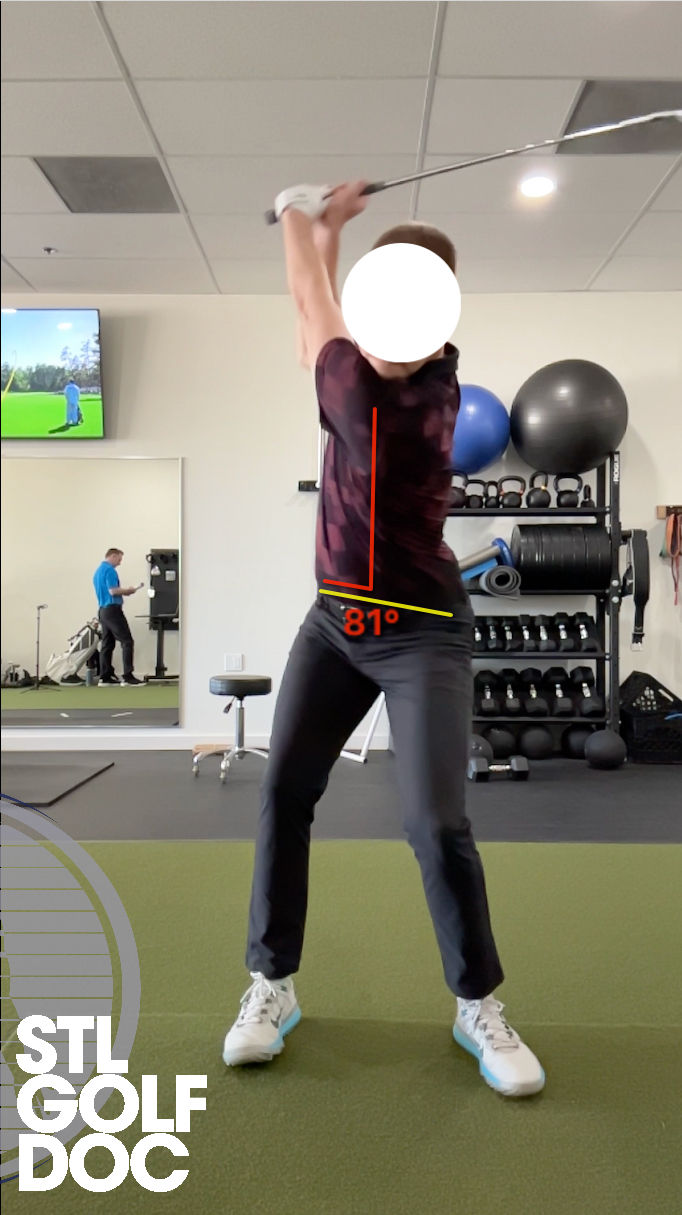
Normal separation between the upper and lower body at the top of the backswing is around 45 degrees. When rotational separation exceeds this, the risk of low back injury increases significantly.
Common causes:
Hip rotation mobility restrictions
Lumbar spine flexion motor control deficits
5. Excessive Side Bend

Excessive side bend occurs when there is too much lateral bend in the spine during the downswing or through impact. When spine bend exceeds 22 degrees, the risk of injuring lumbar facet joints or discs increases dramatically.
Common causes:
Thoracic spine mobility restrictions
Hip mobility limitations
Identifying the Root Cause of Your Swing Faults
Mobility limitations dominate the potential underlying causes for these injury-inducing mechanics. However, strength deficits, motor control issues, and pain can also contribute—and usually do so in unwanted combos - would you like the pain, weakness, and control combo for here or to go? No thanks, I'll see the Saint Louis Golf Doc instead!
A systematic assessment can determine which body parts are driving your dysfunction. If the hip and thoracic spine are the culprits, we then determine if the limitations are:
Joint-related
Soft tissue-related
Motor control-related
Some combination of these factors
This understanding is critical because each type of limitation requires a specific treatment approach.
Saint Louis Golf Doc Treatment Solutions for Golf Swing Mechanics Issues
For Muscle/Fascial Restrictions
Stretching
Hold stretches for a minimum of 30 seconds
Focus on slow, controlled breathing
Perform daily for best results
Massage Tools
Massage guns, cupping, sticks, or balls for superficial tissues
Portable and convenient for regular use
Targets deeper tissues through compression
Best performed after warming up
Stay hydrated before treatment
For Musculoskeletal Weakness
Exercise 2-3 times weekly for 6+ weeks
Traditional strength training uses 60-80% of 1RM for strength gains
Blood flow restriction training requires only 20% of 1RM for similar strength gains
For Joint Restrictions
Professional assessment required
For Motor Control Deficits
Requires skilled training beyond self-teaching
Focuses on brain training, not "muscle memory"
Essential after mobility has been restored
Professional guidance recommended
For Pain-Related Restrictions
Longer delays mean longer recovery periods

Take Action Now Before Injuries Happen
How do you avoid injury-inducing mechanics? Get tested by Dr. David Didlake, DPT in our Ellisville clinic! A comprehensive assessment can identify your specific risk factors and guide targeted treatment.
Remember, your body is holding back your golf. Not your age.
As the creator of The Golf Recovery Method™, I've created a system designed to help golfers over 40 achieve greater success with their game. Most golfers spend years trying to fix their swing. We help golfers fix the body behind the swing.
Start with the Free Golf Recovery Scorecard and take the first step toward understanding what's holding your game back.
SCHEDULE YOUR IN-PERSON OR ONLINE SESSION TODAY!
Here's to your health and your golf game!
Dr. David Didlake, DPT
PT, Cert. SMT/DN, CSCS, Cert. TPI Medical Level 3, Dip. Osteopractic, FAAOMPT
Owner, Integrative Therapeutics; Creator, The Golf Recovery Method™
Follow me @theintegrativeclinic @thestlgolfdoc
About the Author
Dr. David Didlake, PT, DPT is a fellowship trained integrative physical therapist and golf performance specialist with extensive experience in sports injury recovery, headache management, and painful spinal conditions. He holds advanced certifications in manual therapy, dry needling, and golf performance, and as owner of Integrative Therapeutics, he is passionate about helping active adults achieve their goals safely and effectively.
Medical Disclaimer
This article is for informational purposes only and does not constitute medical advice. Always consult with a qualified healthcare provider before beginning any new treatment or therapy.
Related Articles
Electric Dry Needling: A Modern Approach to Pain Relief. by Dr. David Didlake, DPT
Blood Flow Restriction Training: The Science-Backed Method for Maximum Muscle Gains with Minimal Resistance. by Dr. David Didlake, DPT
Manipulation Therapy Explained: Benefits, Safety, and When It's Right For You. by Dr. David Didlake, DPT
Near Infrared Light Therapy: The Red Light Revolution in Healthcare. by Dr. David Didlake, DPT
The Science of Healing: Understanding How Your Body Recovers From Injury. by Dr. David Didlake, DPT
Understanding Pain: A Journey Through Your Body's Warning System. by Dr. David Didlake, DPT
What is Integrative Physical Therapy? Understanding Treatment, Benefits & Expert Care. by Dr. David Didlake, DPT
The Critical Role of Hydration in Athletic Performance and Overall Health. by Dr. David Didlake, DPT
Collagen: The Essential Protein for Golf Performance and Recovery. by Dr. David Didlake, DPT
Low Back Pain in Golfers: Evidence-Based Treatment & Prevention Tips from a Fellowship Trained Integrative Physical Therapist. by Dr. David Didlake, DPT
Golfer's Elbow vs Tennis Elbow: Why Your Golf Swing May Be Hurting Your Elbows. by Dr. David Didlake, DPT
The Science of Golf Swing Kinematics: Understanding Your Body's Motion for Maximum Performance. by Dr. David Didlake, DPT
Unlocking Your Golf Potential: The Science of Effective Practice. by Dr. David Didlake, DPT
The Force in Golf: How Strength and Mobility Power Your Swing. by Dr. David Didlake, DPT
How Vision Impacts Your Performance: What Every Athlete Should Know. by Dr. David Didlake, DPT
Body Tempering: The Weighted Technique Revolutionizing Soft Tissue Treatment. by Dr. David Didlake, DPT


Comments